
70+ BESS assignments, one specialist house
More than 70 battery energy storage assignments across Australia and New Zealand - spanning connection studies, system strength assessments, GPS registration, SIPS design, primary and secondary engineering for battery substations, independent and owner's engineer roles, and construction oversight.
This page covers the connection process and the evidence. The service overview lives at BESS, storage & grid connection.
The studies that get a battery over the line
Connection studies, GPS negotiation, and model validation in both RMS and EMT domains - through R1 and R2. The compliance package regulators, network owners and lenders need before the first cell is charged.
Grid-forming credentials are published: CIGRE Paris Session 2026 paper 11251 covers compliance and model validation of a grid-forming BESS replacing synchronous generation in Australia's northern grid. Technical publications →
Independent Engineer - when the battery cannot fail in public
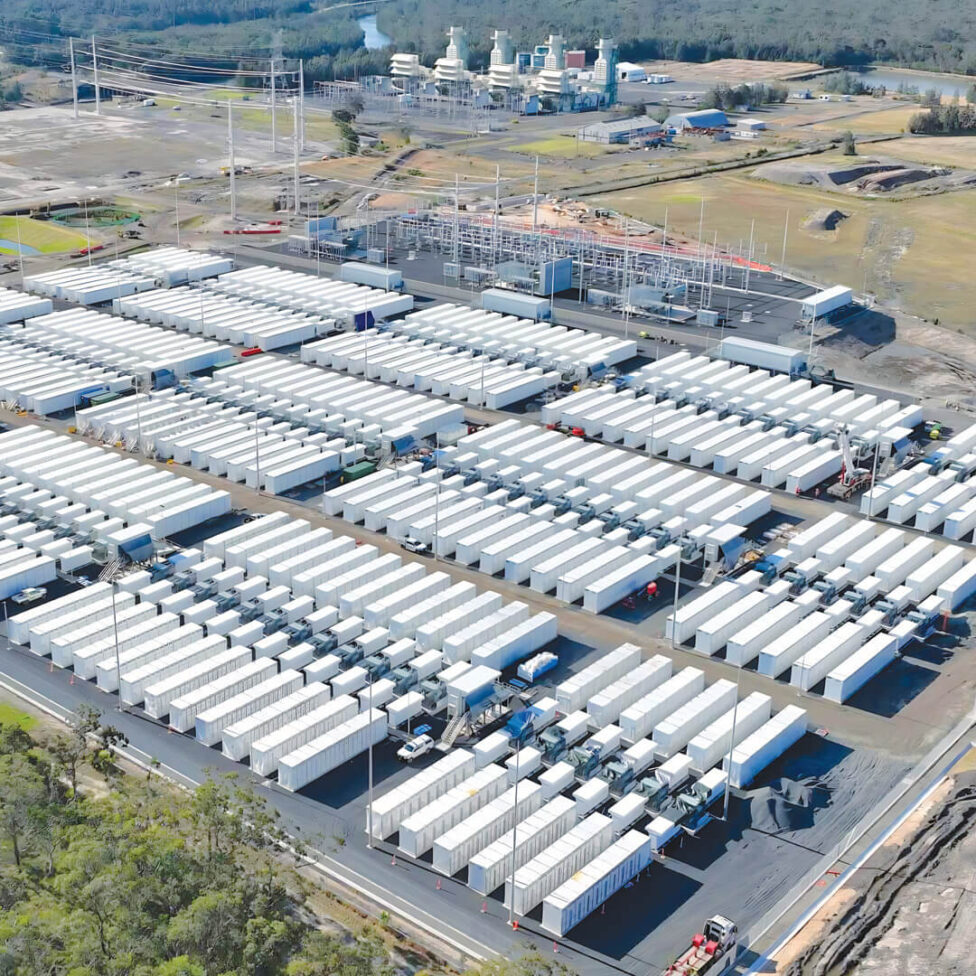
On high-value, high-consequence storage projects - where lenders, government and network owners need an independent technical voice - APD operates as independent engineer. Waratah Super Battery is the headline case: Independent Engineer for EnergyCo and Transgrid, 1,400 MWh next to Munmorah, SIPS across 28 critical sites, primary, secondary and automation design review, and live test witnessing. Largest in the Southern Hemisphere.
Designing the battery substation itself
Eraring BESS
Primary and secondary design of the new BESS substation and 330 kV tie into the existing Eraring switchyard - Stage 1 and Stage 2, on live 330 kV plant.
Case study →Port Hedland BESS
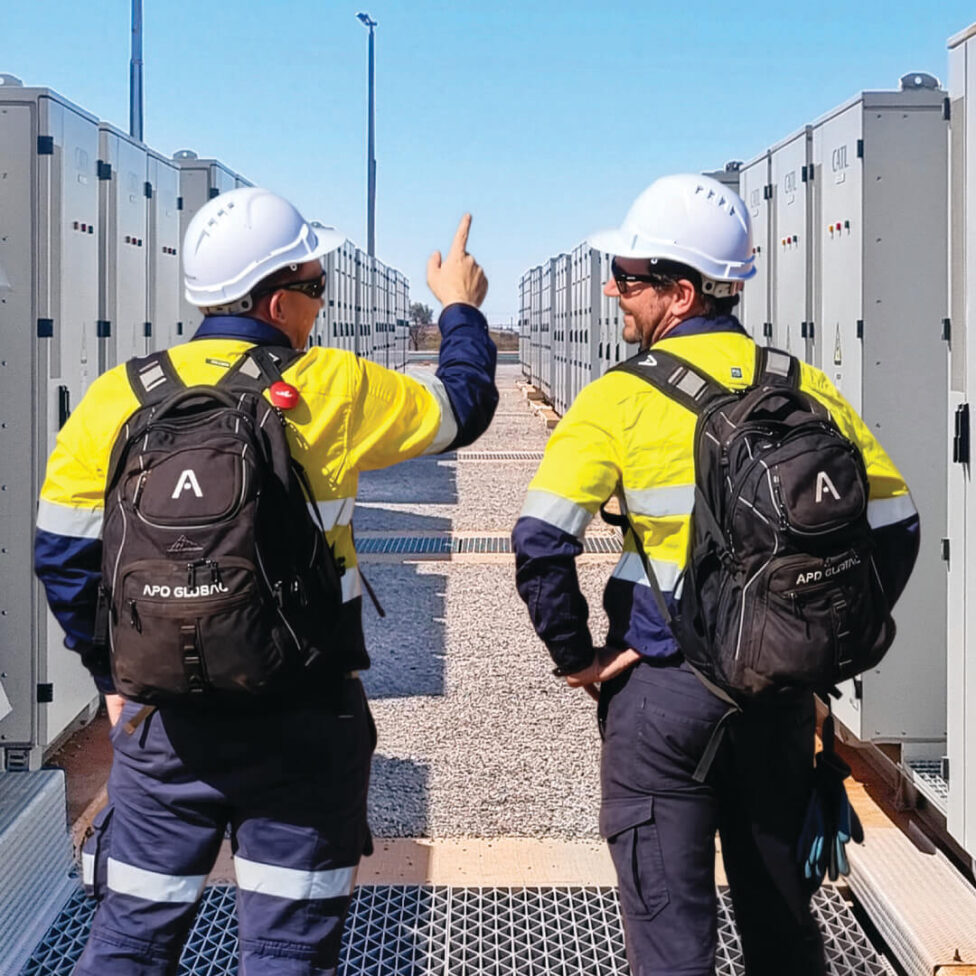
Complete detailed design - primary, secondary, protection and grid connection.
Protection, control & SCADA
Protection, control, SCADA and communications - integrating the battery without de-stabilising the host network.
SIPS and special protection schemes
System Integrity Protection Schemes are where a battery earns its keep on the worst day. APD's SIPS design and logic review work is headlined by Waratah's 28-site scheme - with laboratory proving before grid connection, not after.
Research the industry runs on
Three CIGRE Paris Session 2026 papers bear directly on storage and inverter-based resources: 10392 (EMT review of distance protection with IBR), 10487 (coordinated UFLS and DER shedding, co-authored with AEMO) and 11251 (grid-forming BESS compliance and model validation). Read the summaries →
BESS FAQ
What studies does a BESS need to connect in the NEM (National Electricity Market)?
The same Chapter 5 pathway as any generator - connection studies, system strength assessment, GPS negotiation and model validation - plus battery-specific behaviours: charge/discharge transitions, grid-forming or grid-following control, and any SIPS obligations.
What is a grid-forming battery?
A BESS whose inverters set their own voltage waveform rather than following the grid's - letting it provide system strength and inertia-like support that grid-following plant cannot.
What does an independent engineer do on a BESS project?
More than review designs. An independent engineer takes on the owner’s hat - assessing the project the way an asset owner would, with the long-term view - through design, construction and energisation, and on into operations and maintenance - so the asset succeeds across its whole life, not just at handover. That full asset-owner perspective, from someone who isn’t the designer, is the assurance lenders, government and network owners rely on - design review and test witnessing included.
How long does BESS grid connection take?
Driven by the study load and GPS negotiation more than by construction. Batteries with novel control modes carry more model-validation work; early engagement on studies is the main schedule lever.
Related
Grid connection Australia
The full connection pathway - NEM and WEM, application to energisation.
Explore →Power system studies
Load flow, fault level, stability, system strength and model validation.
Explore →Technical publications
CIGRE Paris Session 2026 papers - grid-forming BESS, protection with IBR, UFLS.
Explore →