
At a glance
Distribution at a glance
Quick answers
Chapter 5A, quickly
What does Chapter 5A actually cover?
Connection of retail customers and non-registered embedded generation to NEM distribution networks - the pathway for most commercial solar, distribution-connected batteries and mid-scale projects. Each distributor runs its own application process and technical requirements within that framework.
When does a distribution project step up into Chapter 5?
Distributors commonly apply the full NER Chapter 5 process and AEMO registration from around the 5 MW mark - though thresholds and categories vary by distributor, so confirm with the relevant network early.
Will my project face export limits?
Possibly - what the local feeder can absorb shapes what you may export, and flexible or zero-export arrangements are increasingly common on busy networks. Model the revenue impact before signing the offer.
What studies does an embedded generation connection need?
Scaled to size: protection coordination and voltage assessment for mid-scale plant, stepping up to power system modelling where export, fault level or power quality impacts warrant it. Battery systems bring control-mode and export-management behaviour into scope at smaller sizes than developers expect.
What kinds of connection offer exist?
Basic, standard or negotiated, depending on the connection's complexity - with assessment fees and timeframes published by each DNSP.
Who is my distributor?
NSW: Ausgrid, Endeavour Energy or Essential Energy. QLD: Energex or Ergon Energy. SA: SA Power Networks. VIC: AusNet, Jemena, United Energy, CitiPower or Powercor. ACT: Evoenergy. TAS: TasNetworks' distribution track. The linked list is under official documents below.
How long does a distribution connection take?
Straightforward connections commonly complete in months. Negotiated connections, network augmentation or constrained feeders extend it - and crossing the Chapter 5 threshold changes the timeline class entirely.
The pathway
The distributor's path to energisation
- Pre-application enquiry
Local capacity, export expectations and connection point options with the DNSP.
- Connection application
Through the distributor's portal or process, with plant and protection detail scaled to size.
- Network assessment
Feasibility and engineering assessment, with fees and timeframes published by each DNSP.
- Connection offer and agreement
Basic, standard or negotiated depending on the connection's complexity.
- Works and protection compliance
Customer and network works, protection settings, control and monitoring integration.
- Witnessed commissioning and energisation
Compliance evidence closed out before export.
Studies
Studies, scaled to size
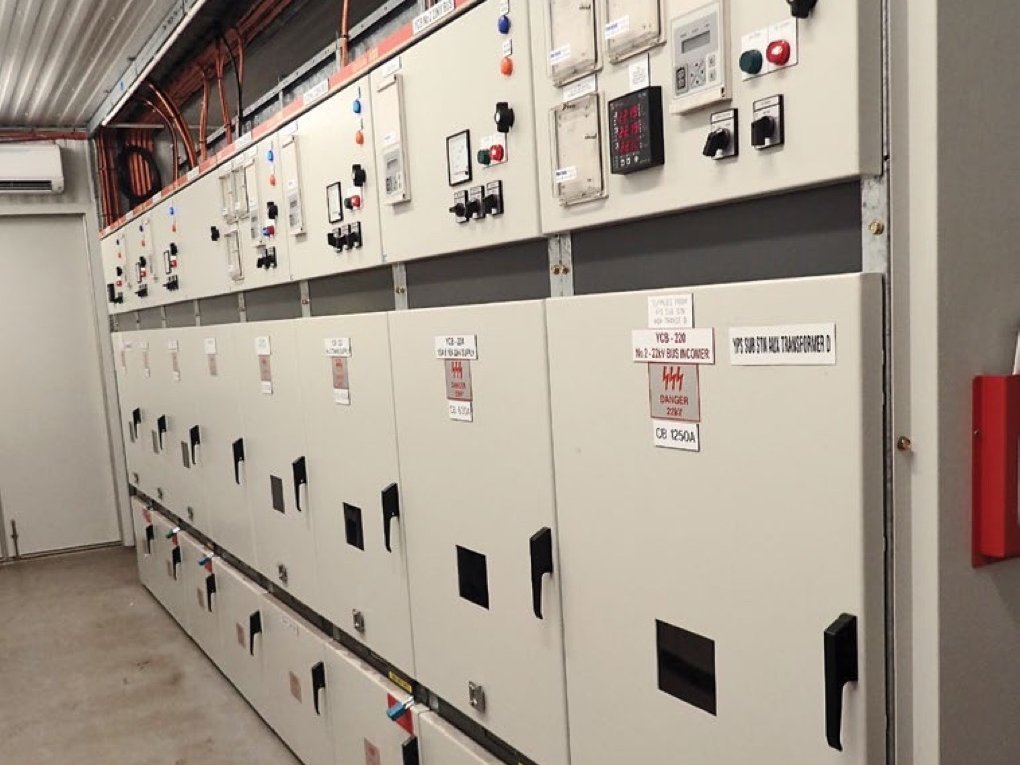
Crossing the registration threshold changes the timeline class entirely - the Chapter 5 process.
The honest part
Where it gets hard
The feeder decides what your plant may export, and flexible or zero-export arrangements are increasingly the offer on busy networks - modelling the revenue impact before signing is engineering, not paperwork. APD does that modelling.
Projects near the registration threshold face a step-change in study load and process either side of it - sizing decisions deserve connection advice before they are locked. Grid connection services.
DNSP requirements for protection, monitoring and remote control vary network to network, and retrofitting them is dearer than designing for them.
Official documents
Every distributor, one list
Last reviewed: October 2026 · Always confirm current requirements with the network directly.
Proof, not promises
APD at distribution scale

South Jerrabomberra
A 132 kV GIS zone substation designed for a growing distribution network.
The project →
BESS connections
Battery connection studies and engineering - from distribution scale to the registration threshold and beyond.
BESS grid connection →Keep navigating