
Every substation brief eventually arrives at the same fork: air-insulated switchgear in an open yard, or gas-insulated switchgear in a sealed enclosure. The technical difference is easy to state. AIS uses open-air busbars and switchgear spread across a larger yard, with air itself doing the insulating. GIS encloses the switchgear in sealed, insulated modules, packing the same electrical function into a fraction of the footprint - often inside a building.
What actually decides between them is less tidy. APD Global delivers both, up to 500 kV, as part of full-scope HV substation design - so this is how the choice tends to be made in practice, rather than how it reads in a vendor brochure.
Footprint economics
The first driver is land - what it costs, and whether it exists at all. An AIS yard needs room for open-air clearances between phases, between bays and to the boundary fence. Where land is available and cheap, that space costs little and AIS generally wins on capital cost: less civil complexity, no hall, plant that can be craned in from above.
Reverse the land equation and the answer flips. On urban infill sites, land at commercial value can dominate the project economics. GIS compresses the substation into a building envelope, and suddenly the comparison is not "switchgear versus switchgear" but "a yard you cannot fit versus a hall you can". That is why GIS wins on urban infill, brownfield industrial and space-limited network sites - the site constraint makes the decision before the electrical engineers do.
Constrained urban and brownfield sites
Constrained sites bring more than a footprint problem. Noise, visual impact, planning conditions and neighbouring land uses all push toward an enclosed asset. A GIS hall can look like any other industrial or commercial building; an open 132 kV yard cannot.
But choosing GIS means choosing a building - and the building is half the engineering. The hall has to hold the plant, the slabs have to sit within millimetres, the cranes have to reach every module, and the secondary systems still have to talk to the network. That is why APD treats GIS substation design as civil, structural, mechanical and electrical in one house, not as a plant pack with a shed around it.
Lifecycle cost, not just capital cost
Capital cost comparisons flatter AIS. Lifecycle comparisons are closer. An open yard lives outdoors for decades - exposed insulators, corrosion, vegetation, pollution and weather all feed the maintenance budget. Sealed GIS modules take the primary plant out of the weather, which changes the maintenance profile of the asset over its life.
The honest answer is that neither technology is "cheaper" in the abstract. The comparison has to be run on the actual site, the actual network requirements and the actual operating regime - which is why the AIS/GIS decision belongs early in the design, alongside the layout and connection work, not bolted on after the site is bought.
Maintenance access - the forty-year question
An AIS yard is transparent: every conductor, insulator and mechanism is visible and reachable. Faults can be found by looking, plant can be replaced bay by bay, and extensions bolt on at the fence line. GIS trades that openness for compactness. The plant is sealed, so routine intervention is rarer - but when major work is needed, it happens inside a building, with gas handling, and through whatever access the original design allowed.
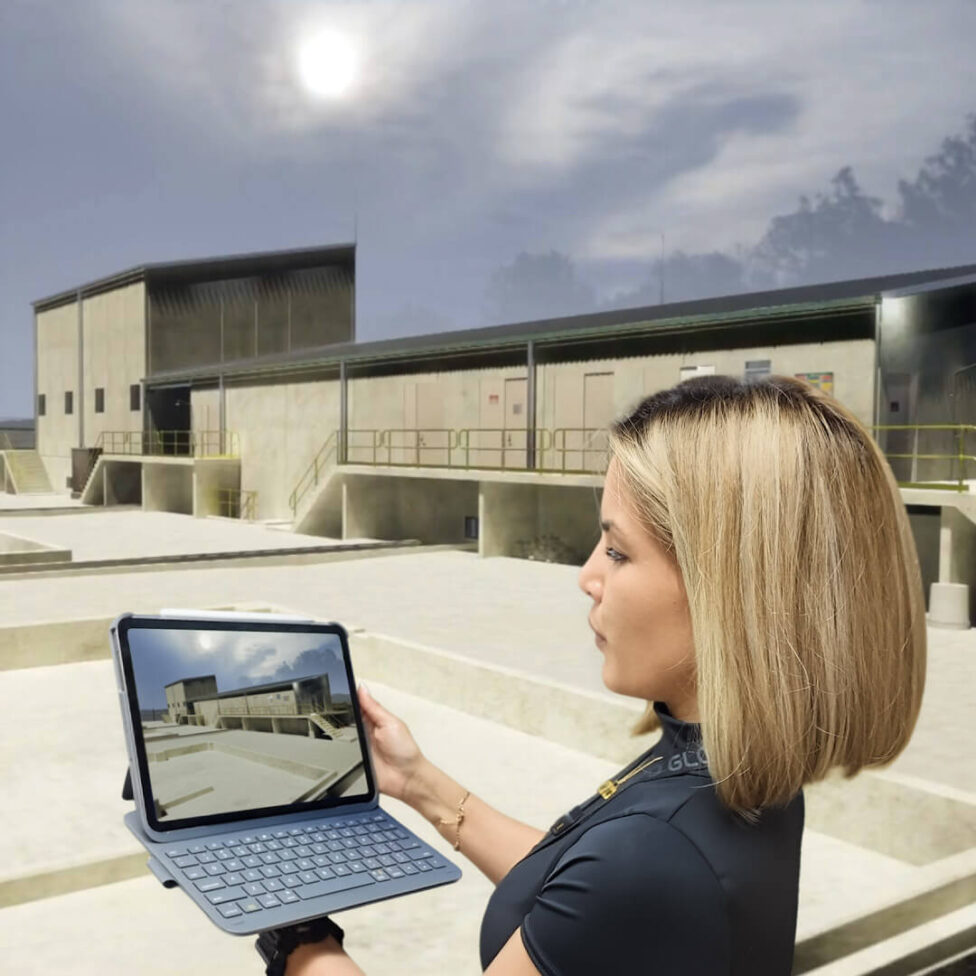
This is where GIS projects are won or lost at the design stage. Crane reach, laydown space, module removal paths and maintenance platforms cannot be fixed after the concrete is poured. It is precisely why APD delivers greenfield GIS in full 3D with VR review - the client walks the hall, checks clearances and access, and signs off constructability before a sod is turned.
When each wins
Stripped to the pattern that repeats across delivered work:
- AIS wins where land is available and inexpensive, where staged extension matters, and where the operator's maintenance practice is built around open yards. Most rural and regional transmission and zone substations land here.
- GIS wins where the site is constrained - urban infill, brownfield industrial, space-limited network land - where planning and visual-impact conditions demand an enclosed asset, or where the exposure of an open yard is unacceptable.
- Neither wins by default. The choice is driven by site constraints, lifecycle cost and network requirements - assessed together, early, by people who can design either outcome without a preference to defend.
What the delivered work shows
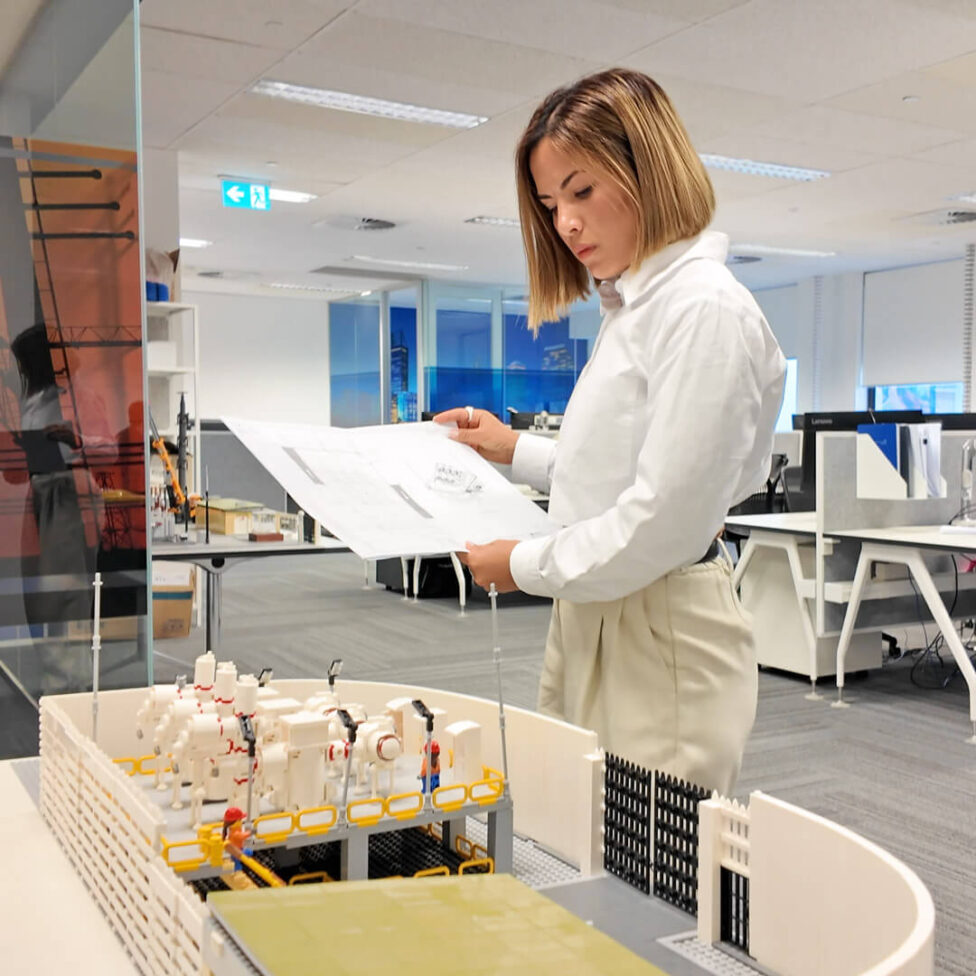
Two APD projects sit at the GIS end of the decision and show what the choice commits you to. At South Jerrabomberra, Essential Energy's greenfield 132 kV GIS zone substation, APD delivered the entire facility - basement, foundations, two-storey tilt-up hall, gantry cranes, suspended slabs holding GIS and switchboards to 2 mm over large spans - with VR and AR design reviews before construction. At Bunning Lake, Western Power's new 132 kV GIS, the design was built as a connected digital twin and then rebuilt as a physical scale model, so the yard could be walked on a table by people who will never put a headset on.
Both jobs make the same point: GIS is not a product selection, it is a building project wrapped around switchgear. AIS is not the "basic" option, it is the right answer on most unconstrained sites. The engineering task is to make the call on evidence - footprint economics, lifecycle cost, maintenance access and the constraints of the actual site - and then carry the chosen technology through primary, secondary, protection and earthing as one design. That full scope is what APD Global's substation design practice exists to deliver.