
HV substation design is the engineering of a high-voltage substation as one integrated package - the primary plant and equipment, the protection and secondary systems, the earthing, the layout and general arrangement, and the civil works - designed, tested and commissioned to the network owner's standards.
APD Global delivers substation design and engineering up to 500 kV - primary plant selection and layout, secondary systems, protection, civil and structural, earthing, lightning protection, and 3D design with VR review capability. Nothing is handed off to a subcontractor the client doesn't see.
The team is accredited with Essential Energy, Western Power, Transgrid, ElectraNet, Ausgrid, AusNet, TasNetworks and other Australian network owners. In New Zealand, accreditation extends to Transpower and the distribution networks. New European clients are served from the Rome and Milan offices.
AIS and GIS
Air-insulated and gas-insulated switchgear to 500 kV, including 132 kV GIS substations for Essential Energy and Western Power. APD has delivered zone substations, terminal substations, switching stations and customer substations. Where the site is constrained - urban infill, brownfield industrial, space-limited network - GIS is a first-class offer: the hall, the basement, the frames the plant sits on. GIS substations →
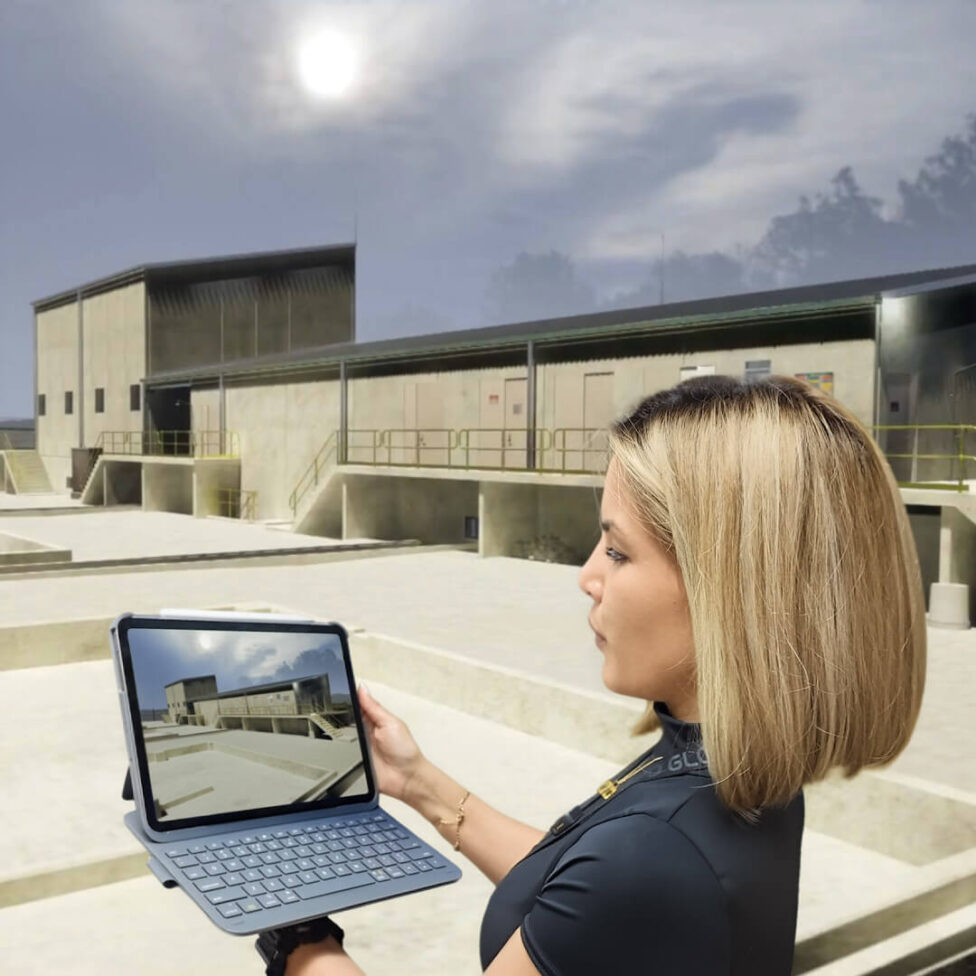
3D design and VR review
Greenfield projects are delivered in 3D with VR review capability - enabling client sign-off of constructability, access, clearances and aesthetics before a sod is turned. The same model feeds construction and O&M documentation.
Owner's engineer and independent engineer
Where the client needs a technical check rather than a design team, APD operates as owner's engineer or independent engineer - reviewing third-party substation engineering, witnessing testing, and providing the independent assurance that lenders, regulators and operators need on high-consequence assets. On the Waratah Super Battery - Australia's largest grid-scale battery - that meant independent engineer across primary, secondary, automation and the System Integrity Protection Scheme, for EnergyCo and Transgrid. The case →
Earthing, lightning and EMF
Earthing design sits inside the same team, not with a subcontractor - CDEGS modelling, EPR, LFI and EMF assessments, lightning protection and pipeline assessments, backed by site testing that matches the model. Every substation leaves with an earthing system designed and proven by the team that laid out the yard.
Where the substations fit in the transition
From distribution voltages through to 500 kV, every HV substation APD designs is a connection point of the energy transition - terminal stations for REZ transmission, BESS substations, and the brownfield replacements that keep existing networks running while new plant connects under AEMO's NEM processes and Western Power's WEM. Protection, automation and SCADA are designed in from the start - relay settings, IEC 61850, RTU/SCADA cutovers and lab proving before energisation.
Scoping a new substation or weighing up AIS against GIS? Start with the guide to substation design in Australia - site selection, network-owner standards, staging and the decisions that set cost early.
After the standards themselves? The substation design standards in Australia reference maps AS 2067, the international spine and every network owner's published suite in one place.
Connecting plant to the grid as well as building the substation? See grid connection Australia and power system studies.
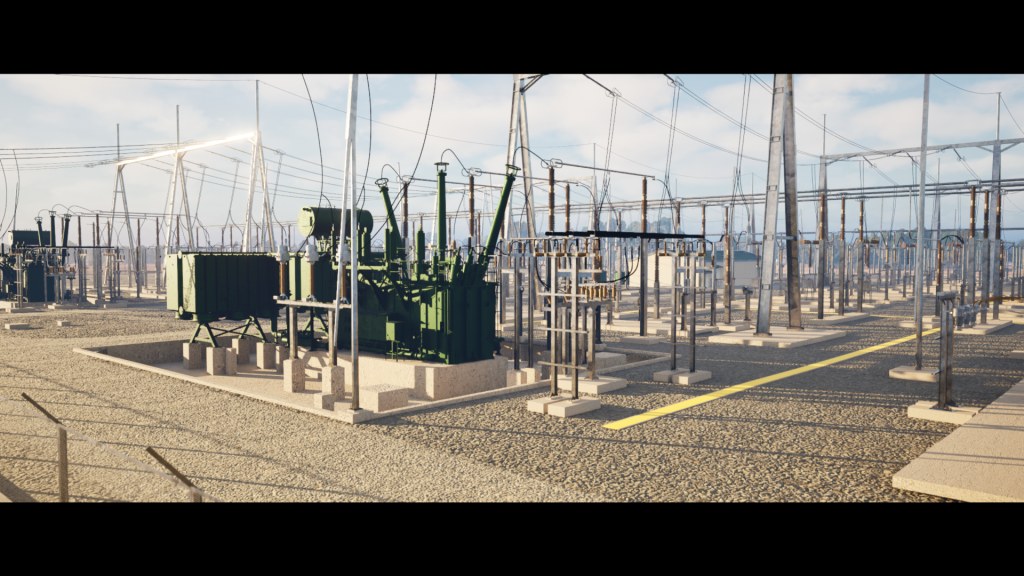
Earthing - what's at stake when a fault hits
Effective earthing is one of those things you rarely notice when it's done right - and absolutely notice when it isn't. As renewable projects grow in scale and complexity, understanding how fault current behaves below the surface is critical to protecting people, assets and network performance.
- On-site soil measurements
- CDEGS modelling of the earthing system
- Verification against Australian and international standards
APD Global's engineers design earthing systems with one outcome in mind: when something goes wrong, the site responds exactly as designed. Because sometimes, the best engineering outcome is that nothing happens.
Discipline by discipline
What a complete substation design covers.
A substation design succeeds or fails as one integrated package - a yard where the primary layout, the protection, the SCADA, the civil works and the earthing were designed by people talking to each other. These are the disciplines APD Global delivers in-house on every substation, alongside the earthing and EMF work above and the independent review role where the client needs assurance rather than a design team.
Primary design
Primary design turns the connection requirements into a physical yard: busbar configuration and redundancy - from single-bus distribution sites to breaker-and-a-half transmission arrangements - fault ratings, clearances to AS 2067, transformer specification, and the selection and layout of every item of primary plant. Redundancy is a deliberate economic decision, argued in numbers rather than habit: N-1 or N-2 where the load is critical, simpler arrangements where it is not. APD Global delivers primary design from distribution voltages to 500 kV, including the detail design of two 330 kV and three 132 kV terminals on Clean Energy Link – North - the work that won Bentley's YII 2026 world award for Transmission and Distribution.
Secondary systems and protection
The secondary system is where a substation earns its reliability. Protection coordination, relay settings and IEC 61850 architectures are designed from the start, not bolted on - and proven in the laboratory before they ever touch the live asset. On brownfield sites the hardest secondary problem is the cutover: migrating protection and control from old panels to new without leaving the network unprotected through any intermediate state. The method that works is lab proving - building and testing the new secondary systems off-site, then cutting over against an outage plan agreed with the network operator. Relay settings, testing and commissioning sit with the same team that laid out the yard, so nothing is lost between disciplines.
SCADA and automation
RTU and SCADA integration is designed in from day one - point mapping, communications architecture and the IEC 61850 configurations that let relays, RTUs and the control room speak the same language. APD Global has delivered substation SCADA and control for networks and for remote industrial operations, including HV substation SCADA and control in the Pilbara with switchboard integration and process control commissioning proven on site. On replacements and uprates, SCADA cutovers are staged and lab-proven the same way protection is, so the operator never loses visibility of a live asset while the panels change underneath it.
Civil and structural
Civil and structural engineering sits inside the same design team: equipment foundations, buildings and the steelwork that holds the yard up - and for GIS, the hall, the basement and the frames the plant sits on. Geotechnical reality drives it: soil resistivity, reactive clays, rock and groundwater shape the foundations just as they shape the earthing design, and transformer deliveries measured in hundreds of tonnes shape the access. Australian conditions add their own list - bushfire attack levels, cyclonic wind regions in the north-west, flood immunity and corrosive coastal environments. On South Jerrabomberra, the civil, structural, mechanical and electrical design was delivered as one multidisciplinary package, with VR reviews before construction.
Network modelling and studies
A substation is a connection point, not an island, and its ratings and configuration come from the network around it. APD Global runs the connection studies and the substation design as one conversation - load flow, fault level, transient and voltage stability, system strength, harmonics, protection coordination, insulation coordination, and model validation in both RMS and EMT. On the east coast that supports AEMO's processes under the National Electricity Rules; in Western Australia, the WEM and Western Power's access arrangements. The result is a yard whose fault ratings, clearances and plant specifications match the studies that justify them. Power system studies →
The tools behind the design
Studies run in PSCAD and PSS®E for EMT and RMS work, with DIgSILENT PowerFactory for steady-state analysis; earthing is modelled in CDEGS and proven by injection testing on site. The physical design is delivered in 3D in a connected Bentley environment - Promis.e, ProStructures, Raceway and Cable Management, with LumenRT for visualisation and PLS-CADD where line packages enter the scope - one shared data environment across every discipline, the approach that carried Clean Energy Link - North to Bentley's YII 2026 world award.
Standards we design to
Four layers of standards govern every Australian substation design. AS 2067 - the Australian standard for substations and high-voltage installations - sets the baseline: clearances, safety distances and layout. Each network owner then applies its own design standards - Western Power, Transgrid, Essential Energy, Ausgrid, AusNet, ElectraNet, TasNetworks - frequently stricter than the Australian Standard, and most require designers to be formally accredited before work is accepted. Secondary systems are built on IEC 61850. And the connection itself runs under the National Electricity Rules in the NEM, through AEMO's connection processes, or under the WEM arrangements in Western Australia. APD Global designs to all four layers as a matter of course - accredited with the major Australian network owners and delivering to their current standards, not a three-year-old memory of them. Below the four layers sit the working standards: the LV side of the yard - auxiliary switchboards, building services - complies with AS/NZS 3000, the Wiring Rules, while the earthing design is argued under the ENA's risk-based EG-0 framework and IEEE 80's deterministic limits, installed to AS 2067 and proven by injection testing. How those earthing standards fit together is its own reference: the substation earthing design guide.
Selected substation projects
From GIS zone substations to 500 kV terminals.
Jerrabomberra Zone Substation
Greenfield GIS zone substation for Essential Energy - building, plant, VR/AR design reviews, full multidisciplinary delivery.
The case →Bunning Lake
Western Power. New GIS substation plus secondary at Sutherland Street - digital twin, then a physical scale model of the same yard.
The film →WA Clean Energy Link - North
Detail design for two 330 kV and three 132 kV terminals, plus twelve line packages and associated communications.
The win →Eraring BESS substation
New BESS substation and integration into the existing Eraring switchyard, including Stage 1 and 2 330 kV connection circuits.
The case →Waratah Super Battery
Independent engineer for EnergyCo and Transgrid - primary, secondary, automation and the System Integrity Protection Scheme on Australia's largest grid-scale battery.
The case →Summerfield BESS 1 & 2
A new 275 kV substation, brownfield augmentation works and some 17 km of transmission infrastructure into ElectraNet's network - detailed design, now commissioning.
The story →The award, on film
The moment the award was announced.
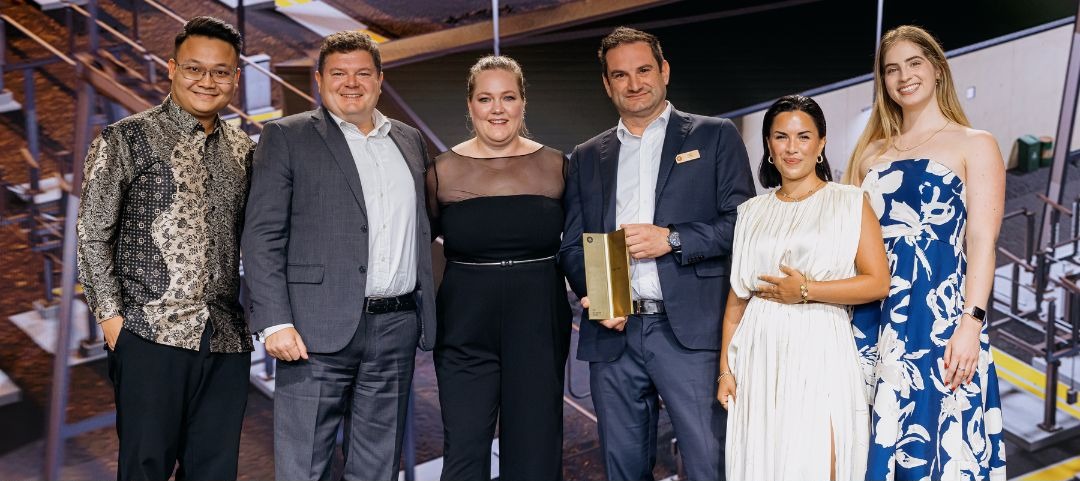
The journey. The anticipation. The moment APD Global was announced as the winner of the 2026 Bentley Systems Year in Infrastructure Award for Transmission and Distribution - Australia's first win in the category, for Clean Energy Link - North. Behind that moment is the work of the people who made it possible.
The full story of the win →Substation design - the questions asked most
Frequently asked questions.
What does electrical substation design include?
A complete substation design covers primary plant selection and layout, secondary systems and protection, civil and structural engineering, earthing and lightning protection, SCADA and telecommunications, and the construction and commissioning documentation that takes the asset to energisation. APD Global delivers all of these disciplines in-house, up to 500 kV - nothing handed to a subcontractor the client doesn't see.
What is the difference between AIS and GIS substations?
AIS (air-insulated switchgear) uses open-air busbars and switchgear across a larger yard; GIS (gas-insulated switchgear) encloses the switchgear in sealed, insulated modules, allowing a far smaller footprint - often inside a building. GIS suits constrained urban, brownfield or space-limited sites; AIS generally costs less where land is available. More on GIS substations →
What is a zone substation?
A zone substation steps power down from the sub-transmission network (typically 66-132 kV) to distribution voltages that supply homes and businesses - transformers, switchgear, protection and control in one facility. APD Global has delivered zone substations across Australia and New Zealand, including full greenfield GIS zone substations such as South Jerrabomberra for Essential Energy.
Who designs substations in Australia?
Specialist power engineering consultancies accredited with the network owners. APD Global is accredited with Essential Energy, Western Power, Transgrid, ElectraNet, Ausgrid, AusNet and TasNetworks among others, and designs substations from distribution voltages up to 500 kV.
Why is earthing critical in substation design?
The earthing system carries fault current safely into the ground and keeps touch and step voltages within safe limits for anyone on or near the site. It must be designed together with the substation layout, not retrofitted - soil resistivity measurement, CDEGS modelling, and injection testing that proves the installed grid matches the model. Earthing design & testing →
What standards govern substation design in Australia?
AS 2067 - the Australian standard for substations and high-voltage installations - sets the baseline for clearances, safety distances and layout. On top of it sit each network owner's own design standards, which are often stricter and move constantly. Secondary systems are designed to IEC 61850, and the connection itself is governed by the National Electricity Rules in the NEM or the WEM arrangements in Western Australia. Designers must be formally accredited with the network owner before their work is accepted.
How do you choose a substation design consultant in Australia?
Check four things: formal accreditation with the network owners you will connect to; the disciplines in-house - primary, secondary and protection, earthing, civil and structural; a delivered record of substations at your voltage level; and current working knowledge of each owner's standards - a consultant who last delivered to a utility three years ago is designing to a version of that utility that no longer exists. APD Global is accredited with the major Australian network owners and designs substations up to 500 kV.
What software is used for substation design?
Studies run in PSCAD and PSS®E, with DIgSILENT PowerFactory for steady-state work; earthing is modelled in CDEGS; and the physical design is delivered in 3D in a connected Bentley environment - Promis.e, ProStructures, Raceway and Cable Management, with LumenRT for visualisation. The toolset matters less than the discipline of one shared model across every discipline - the approach that won Bentley's YII 2026 world award on Clean Energy Link – North.