
APD Global delivers transmission line design across Australia and New Zealand - the full scope from route selection and environmental constraints through to detailed tower design, conductor selection, foundation engineering, stringing and construction packages. The same team delivers the protection and telecommunications that make the line operable.
Panel appointments with Transgrid, Western Power and Transpower cover overhead line and underground cable work, including 330 kV line design and 500 kV transmission line tower design.
REZ and large-scale network studies
APD provided the network modelling, NEM studies and system strength assessments behind Australia's first Renewable Energy Zone - Central West Orana. The same capability is deployed on REZ planning, REZ connection studies and large-scale network augmentation across the NEM and WEM.
Stringing and construction
The hurdle system for transmission line stringing - designed and delivered by APD - represents the kind of specialised construction engineering that most firms refer out. APD keeps it in-house, which means design intent survives all the way to tensioned conductor.
Tower design, tested at full scale
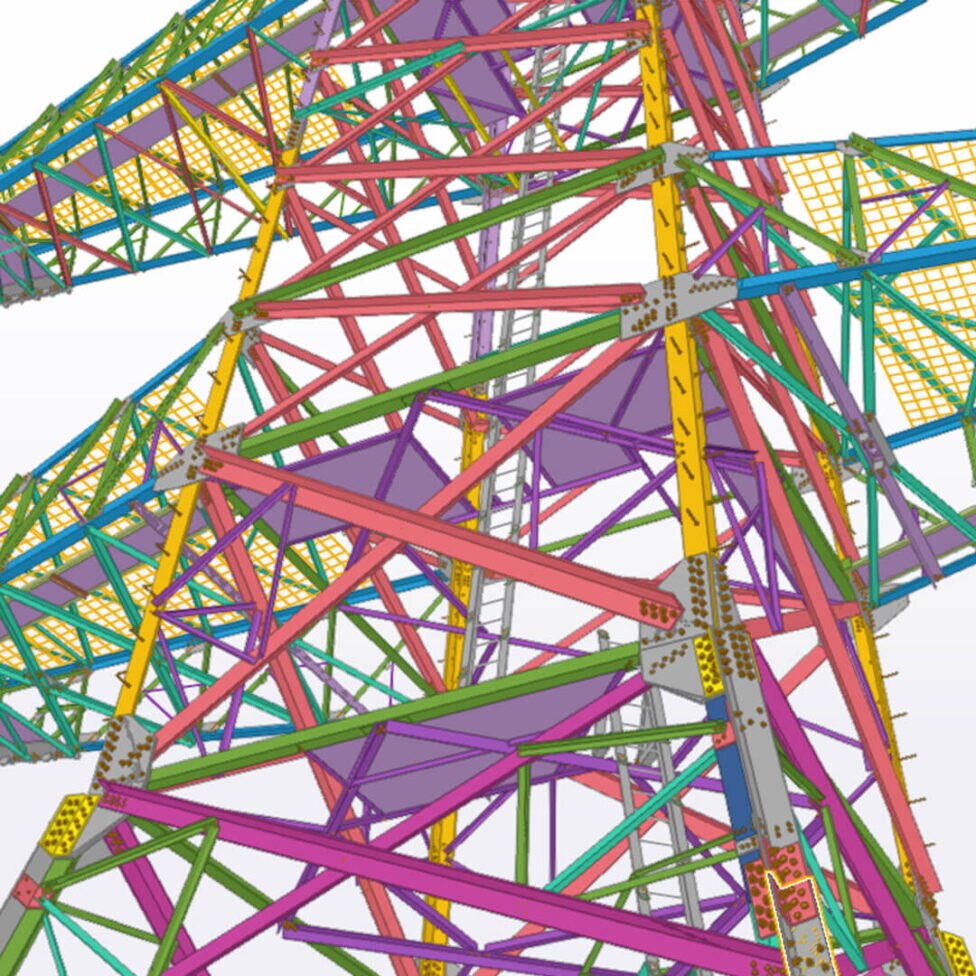
Tower engineering is where transmission design gets real: lattice geometry, member selection, foundation loads and the proof that the structure survives its design events. On HumeLink West, APD's alpine VTM strain towers - 74.2 metres tall, 150 tonnes - went through full-scale load testing, and on CopperString the 500 kV suspension and light tension towers were designed for the line joining Mount Isa to the National Electricity Market. Design that has been tested to destruction criteria is a different class of confidence from design that has only ever lived in software.
Overhead line and underground cable
The same bench covers both sides of the corridor decision: overhead line design - conductor selection, tension sections, clearances, undercrossing protection - and underground cable routes where easements, visual impact or bushfire risk rule the overhead option out. Panel work spans 33 kV distribution through 330 kV and 500 kV transmission.
Earthing sits with the same bench - CDEGS modelling, EPR, LFI and EMF assessments, lightning protection and pipeline assessments, backed by site testing that matches the model. Earthing design & testing →
Selected projects
From alpine strain towers to remote-community lines.
HumeLink East and West
Tender-stage design with Acciona. Detail design with UGL - alpine VTM strain towers to 74.2 m and 150 tonnes. Both sides of Transgrid’s 500 kV link.
Central West Orana REZ
Tender design for EnergyCo’s first large-scale Renewable Energy Zone - studies, 500 kV and 330 kV lines, and 500 kV and 330 kV substations unlocking 3 GW.
WA Clean Energy Link - North
Twelve line packages, two 330 kV and three 132 kV terminals, protection and communications for Western Power's major network augmentation.
CopperString tower design
500 kV suspension tower D5S2BI and light tension tower D5T15BI on the line that will join Mount Isa to the National Electricity Market.
Transmission design - the questions asked most
Frequently asked questions.
What does transmission line design involve?
Route selection and environmental constraints, conductor and insulation selection, tower design and foundation engineering, clearance and undercrossing analysis, stringing and construction packages, and the protection and telecommunications that make the line operable. APD Global delivers the full scope in-house across Australia and New Zealand.
What is a Renewable Energy Zone (REZ)?
A REZ is a network region developed to connect multiple large renewable generators through shared transmission infrastructure. APD provided the network modelling, NEM studies and system strength assessments behind Australia's first REZ - Central West Orana - and works on REZ planning and connection studies across the NEM and WEM.
Overhead line or underground cable - how is the choice made?
Cost, easement availability, visual impact, bushfire risk and maintainability. Overhead is typically far cheaper per kilometre at transmission voltages; underground wins where corridors are constrained or risk profiles demand it. APD designs both, so the comparison is engineered rather than assumed.