
1. The decisions made before a single line is drawn
Most of a substation's cost, risk and programme is locked in during the first ten percent of the design. Three questions dominate.
Who owns the network, and what do they require? Substation design in Australia is not governed by Australian Standards alone. Every network owner - Western Power, Transgrid, Essential Energy, Ausgrid, AusNet, ElectraNet, TasNetworks and the rest - maintains its own design standards, preferred plant, drafting requirements and approval gates, and most require designers to be formally accredited before work is accepted. A technically sound design to the wrong network standard is a rejected design.
How does the project connect? A substation is a connection point, not an island. On the east coast that means AEMO's NEM connection processes; in Western Australia, the WEM and Western Power's access arrangements. Connection studies - load flow, fault level, stability - shape the substation's ratings and configuration, so power system studies and substation design need to run as one conversation, not two consultancies emailing each other. The same applies to grid connection as a whole: the yard and the application succeed or fail together.
Greenfield or brownfield? A greenfield zone substation and a brownfield replacement inside a live switchyard are different disciplines. Brownfield work is dominated by outage planning, staging and keeping the network energised around the construction - more on that below, because it's the consideration generic guides skip entirely.
2. Site selection and geotechnical reality
The ideal site balances proximity to load, line easements in and out, land tenure, access for delivery of transformers measured in hundreds of tonnes, and room to stage construction. Geotechnical investigation then tests whether the ideal site is buildable: soil resistivity (which drives the earthing design as much as the foundations), reactive clays, rock, groundwater and contamination.
Australian conditions add their own list - bushfire attack levels, cyclonic wind regions in the north-west, flood immunity for critical assets, and corrosive coastal environments that change plant specification. These aren't afterthoughts; they are inputs to the layout and the budget on day one.
3. AIS or GIS - the footprint decision
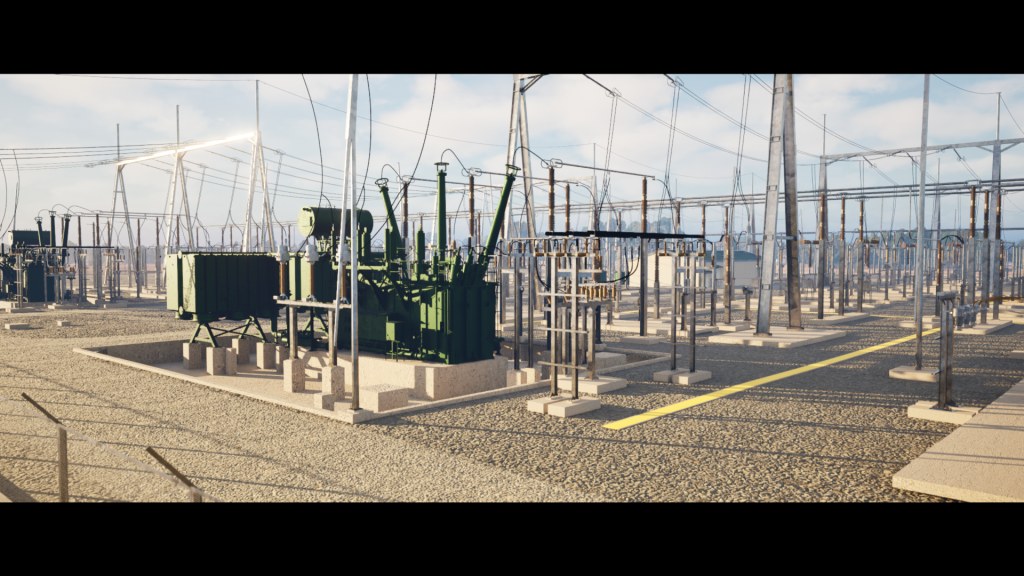
Air-insulated switchgear (AIS) spreads the substation across an open yard; gas-insulated switchgear (GIS) seals it into modules, often inside a building, on a fraction of the land. The crossover is economic and situational: where land is cheap and available, AIS usually wins on capital cost; in urban infill, constrained industrial sites or where community visual impact matters, GIS is frequently the only viable answer.
4. Primary design: plant, layout and ratings
Primary design turns the connection requirements into a physical yard: busbar configuration and redundancy (from single-bus distribution sites to breaker-and-a-half transmission arrangements), fault ratings, clearances to AS 2067, transformer specification, and the civil and structural engineering that holds it all up. Redundancy is a deliberate economic decision - N-1 or N-2 where the load is critical, simpler arrangements where it is not - and it should be argued in numbers, not habit.
5. Secondary systems: protection, automation and SCADA
The secondary system is where a substation earns its reliability. Protection coordination, relay settings, IEC 61850 architectures, RTU and SCADA integration - designed from the start, not bolted on. On brownfield sites, the hardest secondary problem is the cutover: migrating protection and control from old panels to new without leaving the network unprotected. The method that works is laboratory proving - building and testing the new secondary systems off-site before they ever touch the live substation.
6. Earthing: the system you hope never operates
When a fault hits, the earthing system carries thousands of amps into the ground while keeping touch and step voltages survivable for anyone standing on or near the site. It must be designed with the substation layout - soil resistivity measured on site, the grid modelled in CDEGS, earth potential rise and low-frequency induction assessed for neighbouring pipelines and fences - and then proven by injection testing that shows the installed grid matches the model. Earthing retrofitted after layout is compromise engineering. More on earthing design and testing →
7. Brownfield: designing around a live network
Most of Australia's substation spend this decade is not new sites - it is rebuilding, extending and uprating substations that cannot be switched off. That makes staging the design problem: which bays come out first, what temporary plant keeps customers supplied, how protection covers each intermediate state, and how every outage window is agreed with the network operator months in advance. A brownfield design that ignores outage reality is a construction claim waiting to happen.
8. The transition: REZ, BESS and data centres
The energy transition is rewriting substation requirements. Renewable Energy Zone terminal stations, BESS substations connecting storage at transmission voltage, and data-centre loads with demanding reliability expectations all land on the same design team. Storage brings bidirectional flows and inverter fault behaviour; REZ terminals bring staged construction as generation builds out around them.
9. Digital delivery: 3D, digital twins and VR review
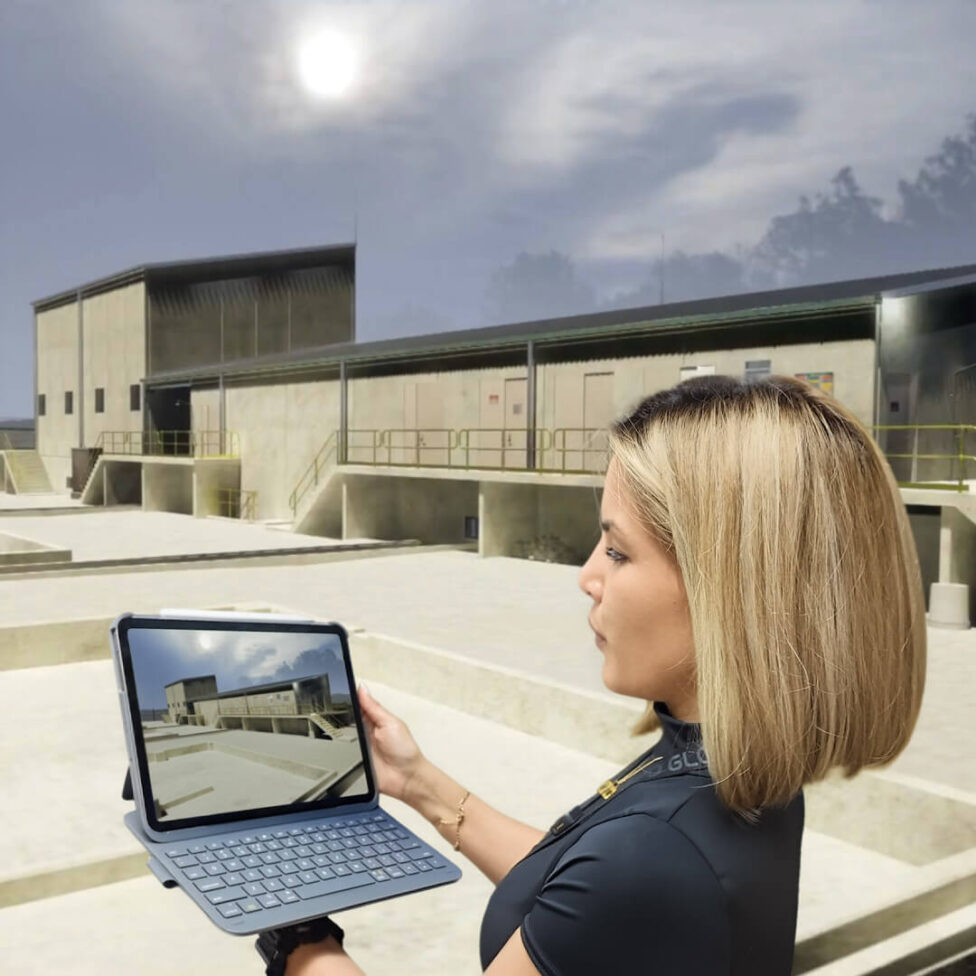
Modern substation design is delivered as a 3D model, not a drawing set with surprises inside. Clients review constructability, access, clearances and even aesthetics in VR before a sod is turned; the same model then feeds construction documentation and operations. The payoff is fewer site clashes, faster approvals and a client who has already walked through the asset they are buying.
10. Community, environment and compliance
Noise, visual impact and EMF are design inputs with regulatory teeth. Low-noise transformers, acoustic barriers, architectural treatment of GIS buildings, EMF assessment against exposure guidelines, and environmental assessment covering habitat, heritage and water - handled early, these are manageable; discovered late, they stop projects.
Case studies
Three substations, three different problems.
South Jerrabomberra
Essential Energy. A greenfield GIS zone substation - the hall, the basement, the frames the GIS sits on. Civil, structural, mechanical and electrical, then VR/AR reviews before construction.
The project →Bunning Lake
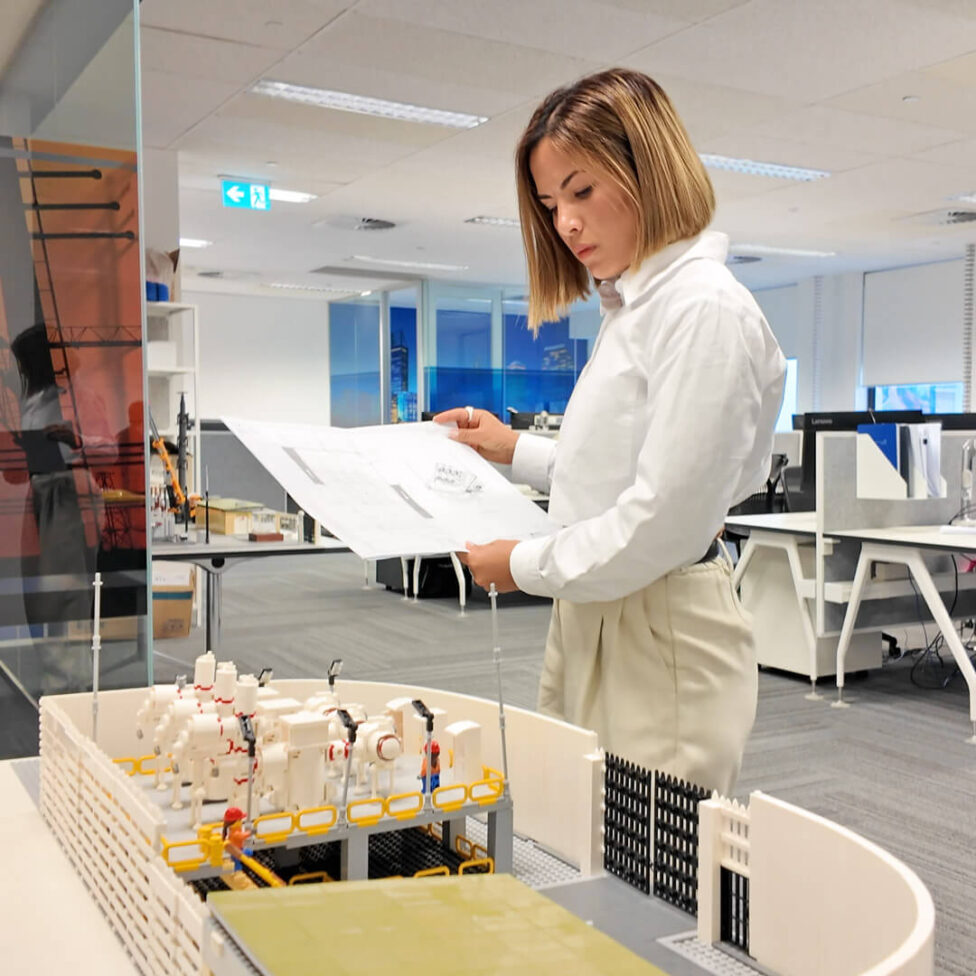
Western Power. A new gas-insulated substation designed as a digital twin - then rebuilt as a physical scale model so the yard can be walked on a table.
The film →Eraring BESS
Primary and secondary design for a new BESS substation and the 330 kV tie into the existing Eraring switchyard - on Australia's largest power-station site.
The project →Standards that govern substation design in Australia
AS 2067 is the spine of Australian substation design - the standard for substations and high-voltage installations, and the source of the clearance, safety-distance and layout rules every yard is measured against. Treat it as the floor, not the ceiling: each network owner's own tables are frequently stricter, and where they differ, the network owner wins.
That second layer is the one that catches people. Western Power, Transgrid, Essential Energy, Ausgrid, AusNet, ElectraNet and TasNetworks each maintain their own design standards, preferred plant and drafting conventions, and most require formal designer accreditation before work is accepted. They are living documents and they move - owning the PDF is not knowing the standard.
Secondary systems are designed to IEC 61850, the architecture language of modern protection and automation. And the connection that justifies the substation runs under the National Electricity Rules in the NEM - AEMO's enquiry, application and negotiation process - or the WEM and Western Power's access arrangements in the west.
A design that satisfies all four layers at once - the Australian Standard, the owner's standards, the secondary architecture and the connection rules - is the actual deliverable. A design that satisfies three of them is a review cycle.
Where projects actually go wrong
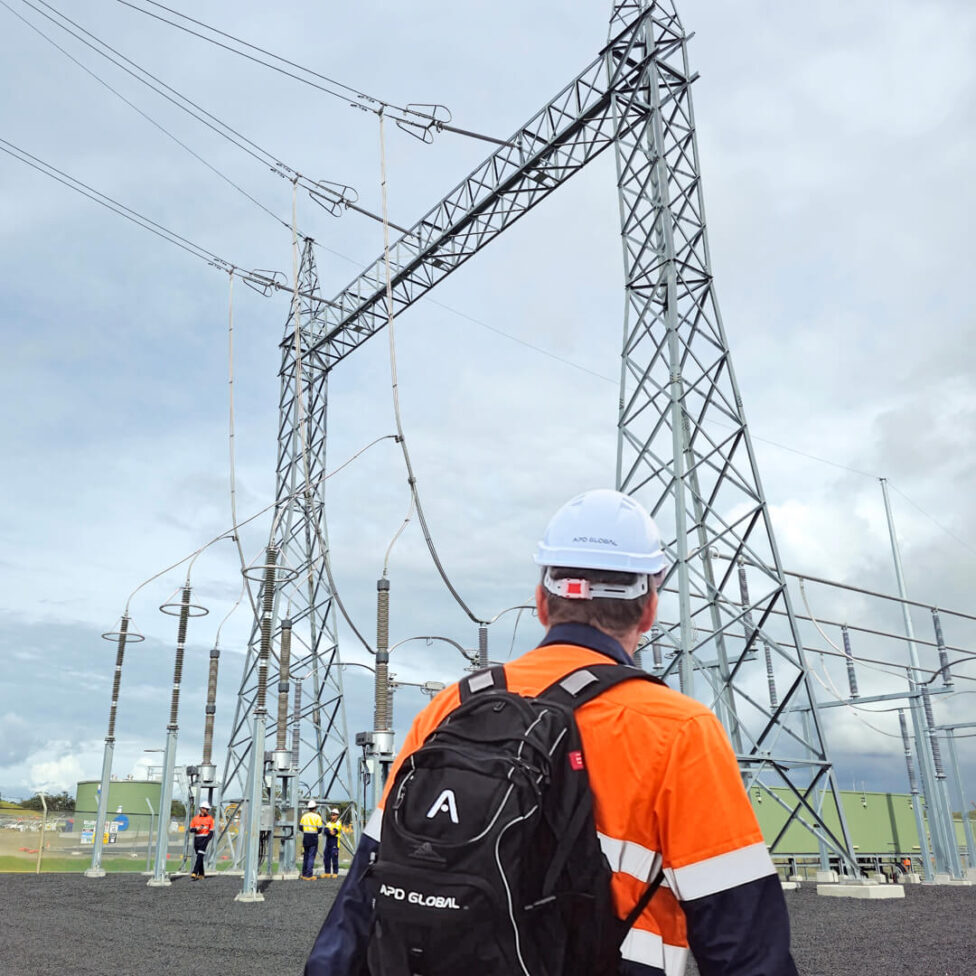
Ask anyone who has stood in a switchyard through commissioning and the list is remarkably consistent. It is rarely a calculation error. It is the assumptions behind the drawings.
Not genuinely knowing the utility's standards. The biggest one, and the least visible from outside. Every network owner's standards are a living body of practice - preferred plant, clearance tables, labelling and drafting conventions, how their reviewers actually interpret the documents - and they move. Owning the PDF is not knowing the standard; a designer who last delivered to a utility three years ago is designing to a version of that utility that no longer exists. The symptom is a technically sound design that bounces through review cycle after review cycle. The cause is distance from the network owner.
Equipment ratings and clearances proven on paper, discovered on site. Clearances to AS 2067 and the utility's own, often stricter, tables; fault ratings; the ratings of every item of plant against the connection studies. These are details on a drawing until steel is standing - and then an infringed clearance or an under-rated item of plant becomes demolition, procurement lead time and a delay measured in months, in a yard full of contractors on standby. The costly moments during construction are almost never exotic failures. They are ratings and clearances that nobody re-verified after something changed.
The systems you can't see. A substation can be physically complete - every structure up, every cable pulled - and still not work. Protection, automation and control is where energisation dates quietly die: relays that won't talk to the RTU, IEC 61850 configurations that pass the desk review and fail in the panel, SCADA points mapped to the wrong state, a cutover sequence that leaves one intermediate stage unprotected. The yard looks finished while the system sits there not talking, and every week of that is a week of delayed energisation with the whole project watching. The fix is unglamorous and proven: secondary systems designed as one integrated system from day one, and lab-proven off-site before they ever touch the live asset.
And the rest of the familiar list:
- Earthing design started after the layout is frozen - compromise or redesign.
- Brownfield staging treated as a construction problem instead of a design input - claims.
- Connection studies and substation design run as separate silos - ratings mismatches.
- Transformer transport limits checked after the site is bought - expensive surprises.
Frequently asked questions
What does substation design include?
Primary plant selection and layout, secondary systems and protection, civil and structural engineering, earthing and lightning protection, SCADA and telecommunications, and the construction and commissioning documentation that takes the asset to energisation.
Who designs substations in Australia?
Specialist power engineering consultancies accredited with the network owners. APD Global is accredited with Essential Energy, Western Power, Transgrid, ElectraNet, Ausgrid, AusNet and TasNetworks among others, and designs substations from distribution voltages up to 500 kV.
How long does substation design take?
A well-run substation design typically takes around five months from concept to construction-ready. The schedule can be accelerated further when the key inputs are defined and known early - which plant is being used, the connection requirements, the network owner's approval gates - because waiting on undefined inputs, not engineering, is what stretches programmes. Heavily staged brownfield scopes with hard outage constraints run longer, and that is a staging reality, not a drafting one.
What is the difference between AIS and GIS?
AIS uses open-air busbars and switchgear across a larger yard; GIS encloses switchgear in sealed modules on a far smaller footprint, often inside a building. GIS suits constrained urban and brownfield sites; AIS generally costs less where land is available.
Talk to the team that designs them
APD Global delivers substation design and engineering up to 500 kV - AIS and GIS, primary, secondary, earthing, civil and 3D digital delivery, in-house.